Eckie News

Treating and Recognising Concussion in Parrots

Emergency care

Parrots suffering head trauma or concussion

I received a phone call today from a very distraught owner who’s parrot had flown full tilt into a window.  The parrot was unresponsive, suffering wing droop, unable to perch and in severe shock, all signs of concussion or potential cerebral haemorrhaging. The obvious question asked was ‘What do I do now’? hence prompting me to write this article as bundling your parrot up in the car and taking them directly to the vet can actually be the worst thing you can do initially.

Unfortunately accidents like this happen all too often both in the home and in the aviary. Some species of birds can be easily spooked eg Neophemas, Finches etc especially when kept as aviary birds as sometimes all it takes is the flash of a set of headlights or the neighbourhood cat wandering past to spook the birds and send them into a state of panic with some parrots even known to have broken their necks due to night fright. Breeders with ‘night fright’ prone parrots are somewhat accustomed to discovering a ‘concussed’ parrot recovering in the bottom of their aviary on their morning rounds.

When it comes to companion parrots, windows are the bane of their existence, hence the reason I have the best excuse ever to only clean mine on the rare occasion. Regardless how ‘used to’ windows your parrot may be, all it takes is for them to take fright,  panic and fly head first into a window trying to escape the source of their fright.  Another common inflictor of  ‘head trauma’ is the humble ceiling fan, I have known many people who are beyond vigilant when it comes to turning off fans when their parrot is out but all it takes is for a friend or relative to come and visit, they may not be as vigilant and its the worst feeling in the world watching your beloved pet fly into a room only to realise the fan has been left on, hearing the dull thunk and hoping to heck that their necks aren’t broken.

Recognising the symptoms of concussion or cerebral damage

There are some very easy signs to look out for if you think your bird may be concussed. Sadly if there is brain damage there is not a great deal that can be done but both can present similarly. If you actually witness your bird fly smack bang into a window, its a pretty easy guess what has caused the problem but some owners will come home to find their bird perching but acting very strangely for no apparent reason. This is where this check list comes is to play.

Symptoms for medium grade concussion

1. Regurgitation

2. Difficulty perching

3. Slight wing droop

4. Aloofness

5. Loss of apetite

6. Uncoordinated flight

7. Needing to sleep a great deal more than usual (unusual sleep pattern)

8. Fluffed up and shivering coupled with above symptom(s)


Symptoms for serious concussion or cerebral haemorrhaging

1. Inability to perch, falling off perch

2. Ataxia – loss of coordination due to neurological damage

3. Head rolling onto back of neck, in circular motion or lolling entirely

4. Eyes rolling, tracking back and forth uncharachteristically

5. Convulsions

6. Unconscious entirely


So what do you do if this happens to your parrot?

1. First and foremost, you need to stay calm. If you panic you will be of no use to your bird, they need you to be level headed and will rely on you for both physical and emotional support.

2.  Gently pick your parrot up supporting their head, keeping it in a horizontal position. Do not let the head loll back, if there is neck trauma you will further this if not supported. Some parrots may bite out of pain if not severely concussed so may pay to grab something to use to protect your hands esp if the beak is a good size.

3. Never lay your parrot on their back to examine them for wounds. This is a sure fire way to kill a traumatised bird. By laying a bird on their back you are immediately dropping their blood pressure, many an avian life has been lost this way as its sadly not common knowledge.

4. Take your parrot to a quiet room away from kids, noise etc and gently and calmly examine them starting at their head. Work your way down the body very carefully checking wings, breast bone, legs etc. Don’t pull or poke, this is more a visual examination making sure their is no bleeding or bones protruding.

Bleeding:  If your parrot is bleeding badly, cornflour (or any flour) is a quick and easy ‘home remedy’ that has saved many birds lives. Simply place the bleeding limb or cover the area in cornflour (never the beak or respiratory areas) and this will act as a coagulant, allowing the blood to congeal and stop as birds can bleed out far too easily.

Fracture/Break: Your bird will need to see a vet as soon as they are stable but you do not want to rush them to a vet while they are still in shock, concussed and obviously in pain. Stop any bleeding, cover the wound (if bone is protruding) with sterile gauze (very gently) and work on stabilising your parrot. Do not try to put a joint back in as this can cause far more damage than good and further shock your parrot.

Stabilising Your Parrot

You need to stabilise your parrot before you even attempt to take them to an avian vet as some birds will sadly not survive the car trip if too badly concussed and in severe shock.

1. As strange as it sounds your voice will be one of the biggest things to help your parrot out of the very first initial stage of shock. Many a life has been saved by an owner simply talking to their beloved bird, their will to live is very strong and you need to give them a reason to fight.

2. You need to keep them warm, very important. If you can wrap them up in a nice warm towel. I have often placed a towel in the dryer for a minute to warm it slightly then wrapped it around an injured bird (very gently). This helps them maintain their body temperature and keep them stabilised. Once a birds core body temperature drops you have a hard time bringing it back up. Keep them warm but never let them over heat as this will also be detrimental. Warm but not hot. Use their feet as a gauge for their body temperature, cold toes means a cold bird.

3. Do not try to feed your parrot any form of food or water. If in shock their digestive system will have shut down and will need IV fluid to re start their system.

Depending on the level of trauma it may pay you to see if your avian vet will make a house call but as many don’t, please make sure your bird is stabilised before even attempting to take them in the car. Notify your vet you are coming so they are prepared.

Please make sure your parrot is stable before you even attempt to transport them. Their breathing should be relatively even and they should be relatively aware of their surroundings or at least somewhat responsive to your voice. Keep them warm when transporting and drive as ‘gently’ as possible. Driving like an insane person will only lead to jostling your parrot around more causing them more harm.

When transporting your parrot, many owners will choose to hold their parrots but if you are placing them in a travel cage, line the bottom with a fluffy towel and stack up either side enabling your parrot to comfortably lean against the sides so they aren’t rocked around with the movement of the car.

Please remember, this is simply advice gleaned from my years of experience.

If such an instance occurs – Always seek avian veterinary advice

The benefits of harness training your parrot

Harness training

Harness training is a rewarding exercise. It brings new freedom to your relationship and allows your Eckie to travel with you on many adventures outside the home.

Many of our Parrot Haven Eckies are harnessed trained. Our clients love to share stories of their latest outings. For example, Shell takes her boy, Wally, everywhere. Wally is terribly spoilt. He goes camping most weekends, is a regular at farming expos and adores four-wheel driving. He recently went caving for the first time. Shell said he was enthralled by the stalactites and loved it when they turned the lights out. Their fellow cavers were delighted when Wally wolf-whistled in the dark. His next adventure takes him on the high seas, as Wally has been invited on board a friend’s yacht. I’m sure he will enjoy himself thoroughly.

The benefits of harness training

Harnessing your Eckie enables you to leave them fully flighted. This means that you don’t have to clip their wings. They are able to maintain a good flying regime, thereby staying fit and healthy.

If your Eckie takes flight while harnessed, you have the security of knowing they are safely tethered. If another animal surprises your Eckie, you can maintain a gentle firmness on the tether. If they fly off in surprise, they are at no risk of injury because the tether will gently reign them in.

Harnessing your Eckie means you don’t have to worry about a large gust of wind accidentally catching your Eckies wings and giving them lift. A clipped parrot can fly a remarkable distance in a strong wind.

Slow and steady

Harness training takes time patience so don’t rush your Eckie. Never attempt to put the harness on, hoping they will get used to it. This will only terrify them, create mistrust and fear of the harness and potentially leave you bloody and bruised.

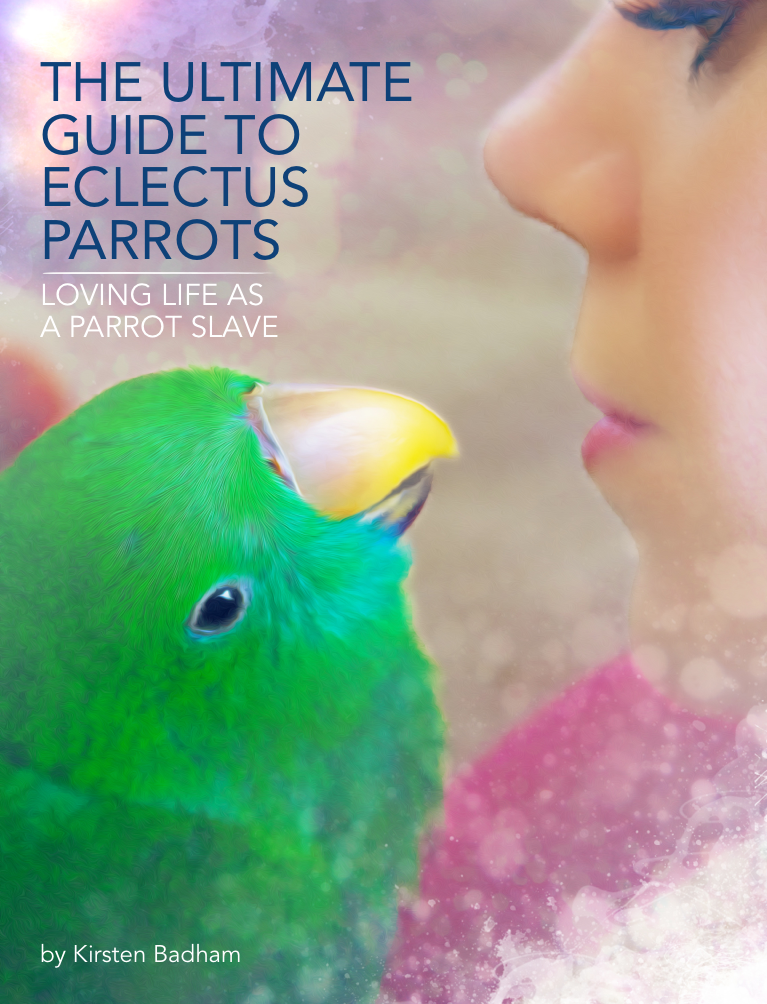
This is a small excerpt from our book: The Ultimate Guide to Eclectus Parrots. This chapter provides step by step instructions on how to safely and gently harness train your Eclectus. Our technique has been used by many Eclectus owners and it works!


Eclectus Parrot Book

Available now

View on the iBookstore


Recall Training Parrots

Recall training

Recall training is one of the most important techniques to master. It allows you peace of mind in knowing that if your parrot escapes, you can recall them safely, with as little stress as possible.

Never be complacent

I have spoken with many owners over the years that believed their parrot would return to them due to the bond they share. Unfortunately, this is not the case. Eckies are at their most confident in their home environment. This is their safe haven. Your Eckie may fly to you by choice in the home, but they are doing so in a stress free and familiar environment. Regardless of how strong your bond is, or how much your Eckie trusts you, you need to recall train. Eckies are essentially wild animals. Their instincts are heavily ingrained and if they find themselves in a crisis situation, instinct will take over. Terror and stress will lead some to fly as fast and far as possible, while others will perch in the tallest tree they can find.

A brief overview of recall training

  1. Place your Eckie on their training stand.
  2. Use your “step up” cue to ask your Eckie to step onto your arm to take the treat. Reward immediately both verbally and with the treat. If your Eckie is hesitant to step up, then this may take some time. Be patient. They will soon learn that stepping up earns them a tasty treat.
  3. Remember to reward even the smallest step or movement forward.
  4. Once your Eckie is stepping up confidently, move back very slightly and have them walk to your arm. Use the recall cue you have chosen, for example “fly to me.”  As soon as they are on your arm, praise and reward. Move back so there is distance between you and the stand and repeat the cue. Increase the distance gradually when you feel they are ready to progress.
  5. Repeat the above process until your Eckie has to fly to you. Increase the distance they must fly gradually. Place your Eckie in high and low positions so they become accustomed to flying both up and down to you.

This is a small excerpt from our book: The Ultimate Guide to Eclectus Parrots. This chapter provides step by step instructions on how to recall train your Eclectus. Our technique has been used by many Eclectus owners and it works!

Information included in this chapter:

  • How to recall train using steps by step instructions
  • Recall on cue
  • Teach your Eckie to search for you
  • Flying up into the tree is the easy part
  • Recall training a clipped Eclectus
  • Peace of mind

Eclectus Parrot Book

 Available now

View on the iBookstore

The Buying and Selling of Unweaned Parrots

Time to bust the myth!

It is a common misconception that you need to hand-raise your baby bird in order to form a strong bond. This is a myth and there is no credence to the belief whatsoever.

Let’s think about this logically

In the wild Eclectus parrots form bonds with their parents until it’s time to leave the nest. Once fledged, they integrate into a flock, which consists of their siblings or unpaired adult birds, and they stay with them until they find a mate of their own. Forming an extremely strong bond with their parents would set them back developmentally, emotionally and even physically. It’s not natural for a baby bird to never leave home and the same applies to our hand-raised parrots. I often find my own babies pulling away from me emotionally when they begin to fledge, as if instinct is telling them to do so.

From a breeders perspective

We spend countless hours with our baby Eckies. It takes approximately 12 weeks to raise each parrot from neonate to weaned bird, and in some cases even longer. During this time, I watch them go through different developmental stages. As young babies they are completely trusting and dependent on me, but this gradually changes as they grow older. They soon discover a desire for independence. I liken this to a teenager preparing to leave home. Once the babies learn to eat by themselves they are no longer reliant on us for their feeds every day. I become less important to them and they turn to me less and less for nurturance.

Aviculture is a profession. As breeders we devote ourselves to researching every aspect of avian life. These are the people you want raising your companion parrot. Aviculturists have experience in recognizing potential problems before they arise and can counter them easily with no stress to the baby. They know how to raise a happy, healthy, large baby who is physically and emotionally ready to begin their life as a companion parrot.

Companion parrots have no say in the path their life takes. I’m sure they would prefer to stay with an experienced breeder until they are old enough to venture out into the real world. Please, save yourself the stress and potential heartache. Let the experts raise your baby. You will be doing both yourself and the parrot a big favor.


Eclectus Parrot Book

 Available now

View on the iBookstore

Phoenix, the Eclectus who Roars Like a Lion

Phoenix quite possibly is the most luckiest Eclectus Parrot alive!


She has the most devoted parents who adore her, showering her with love and attention, her Daddy runs his successful business from home so Phoenix spends the majority of her days on Dad’s shoulder overseeing his work. Her life is one of pure happiness!

She also has the most amazing vocabulary and repitior, speaking in context as well as being able to sing songs even at times creating her own little tunes as her Daddy plays to her on the piano.

Mommy is equally devoted, having built Phoenix her own basket ball hoop they spend hours together playing basketball and the sight of Phoenix shooting a hoop is simply hilarious.

Her favourite game is to play peek a boo, where she will run over to her Mom and Dad, exclaim “Boo”! in her little voice thick with her american accent and then laugh as her parent say “Oh, you scared me”! Then the roles are reversed!

Funnier still is Phoenix will roar like a lion, crow like a rooster, make a monkey noise, meow like their cat, the list goes on and we are lucky enough for these devoted owners to share their beautiful girl not only with us, but also with the world.

Within the next few weeks, clips of Phoenix roaring and meowing are going to be on our Utube site and it is well worth viewing believe me. I nearly fell off my chair at the sound of an Eccy roaring like a lion and she sounds so realistic too!

So once again we are dispelling myths, yes, Eclectus Hens do make wonderful pets but the golden rule applies as with anything – You only get out what you put in – and with Phoenix, you can see the love, devotion and adoration her wonderful parents have for this most special little girl. She is a true role model for all Eccy hens and her parents  are what we wish every parrot owner could be!!